
What “AI Website” Actually Means
Every agency is suddenly selling “AI websites.” Ask ten of them what that means and you’ll get ten different answers, most of which are ChatGPT-style chatbots bolted onto a WordPress theme with a marketing page about “AI-powered experiences.”
So let’s draw a clear line.
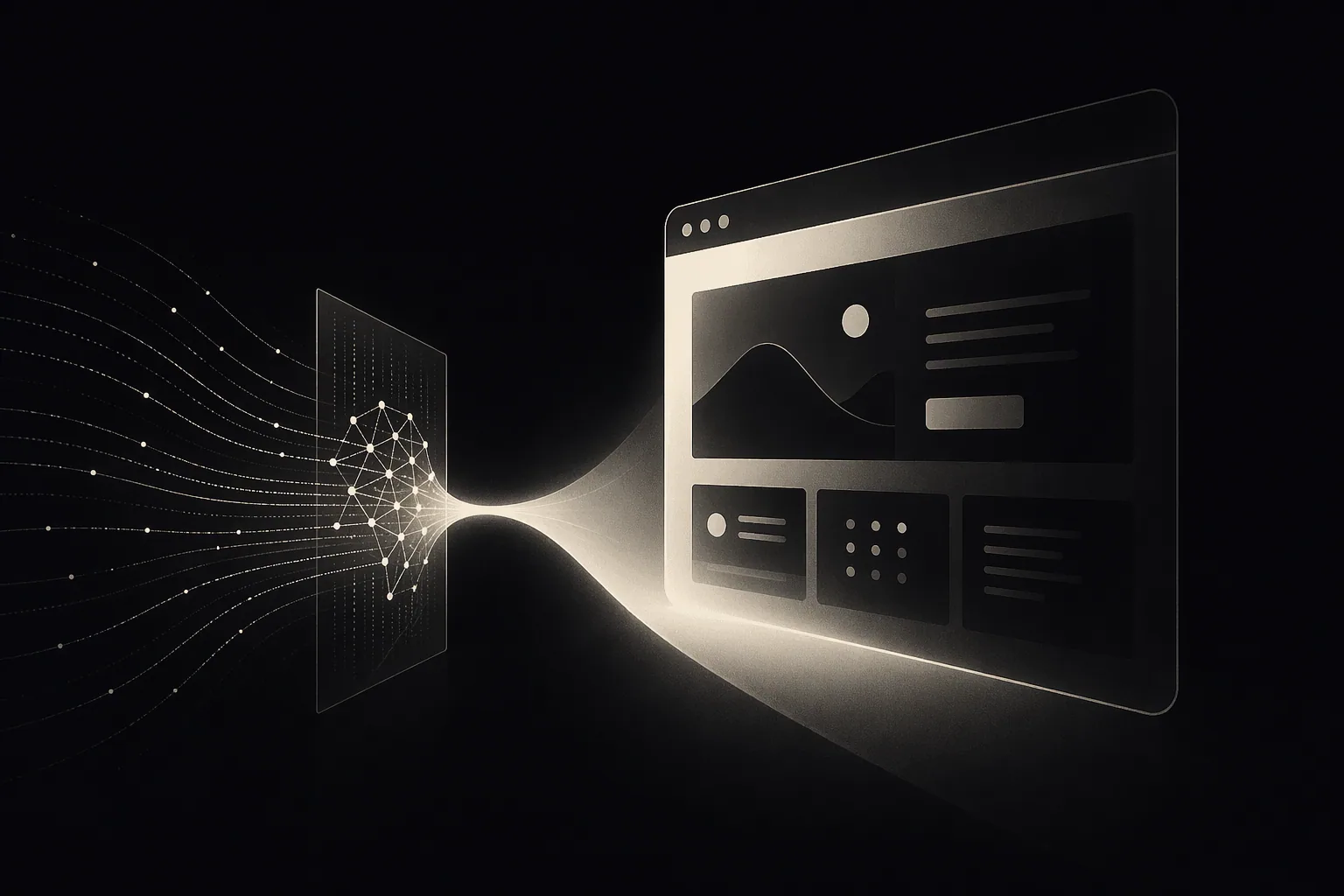
An AI website is a site where AI does work inside the product — not just in the sales pitch. It uses AI to answer visitor questions from your actual content. It’s structured so AI search engines can cite it when someone asks them a question in your industry. It generates imagery, copy, or video at scale without looking like stock. It qualifies leads and routes them automatically. The AI is a real layer of the product, not decoration.
We’ll walk through each of those, with receipts from what we shipped on digitaloutbreak.co. Every feature described below is live on this site right now — you can go poke around and see how each one actually feels in practice.
An AI website uses AI to do work that a human would otherwise be doing — answering questions, qualifying leads, writing content, producing imagery, getting cited in AI search. The AI is the product layer, not a marketing claim.
An On-Site AI Assistant That Knows Your Business
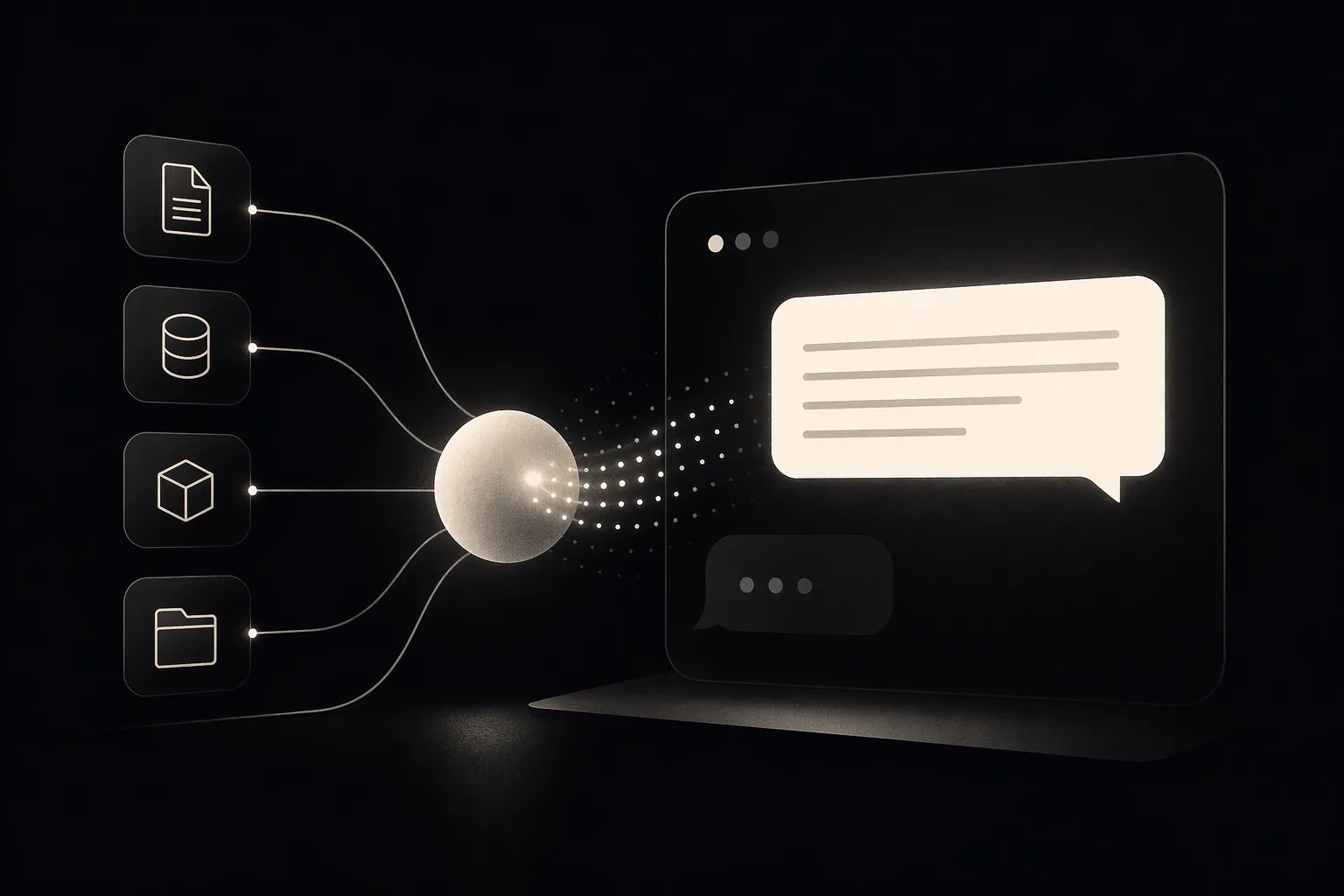
The most visible piece of an AI website is usually a chatbot. But there’s a gulf between “chatbot” and “an AI assistant that genuinely knows your business.”
A scripted chatbot with canned responses is 2015 technology. It frustrates visitors more than it helps them. What actually works now is a modern AI model that’s been given the full context of your business — your services, your work, your writing, your FAQs — with clear guardrails about what it can and can’t say. Visitors ask real questions in plain English and get real answers.
On this site, that’s the AI Assistant — the floating chat in the bottom-right corner. A few things make it work:
- It knows our business. It has access to every service we offer, every case study, every blog post, and every service area. When someone asks “do you do Google Ads in Naperville,” it answers correctly because that’s actually part of what it knows.
- It cites real pages. When relevant, it links to specific articles or case studies — so visitors go from “I have a question” to “here’s exactly the page that answers it.”
- It has guardrails. It won’t invent prices. It won’t promise specific rankings or timelines. If asked something it doesn’t know, it offers to take your email and have Joseph follow up personally.
- It captures leads. When a visitor shows buying intent — asking about cost, describing a project, requesting a callback — it asks for an email or phone number and sends the full conversation context to our inbox. No “fill out this form” friction. Just chat naturally, and if it makes sense, leave your contact info inline.
It works 24/7 without breaks or bad days. It answers the same dozen questions every visitor asks before they’ll fill out a quote form — the ones your phone reps are answering a hundred times a week — and it does it in your brand voice, on your terms.
Optimized for AI Search, Not Just Google
This one is the silent killer.
Traditional SEO is about ranking in Google’s blue links. That’s still important — but for a rapidly growing share of searches, people aren’t clicking blue links anymore. They’re asking ChatGPT. They’re using Google AI Overviews. They’re asking Perplexity, Claude, and Bing Copilot. These AI search engines read the web, synthesize answers, and cite sources. If your site isn’t structured to be one of those cited sources, you become invisible in AI search even if you still rank #1 in Google.
The disciplines are called GEO (Generative Engine Optimization) and AEO (Answer Engine Optimization). We’ve written a whole article on how they work. For an AI website, the core pieces are:
- AI crawler access. The major AI search engines — ChatGPT, Claude, Perplexity, Google AI Overviews, Bing Copilot — all run their own crawlers. Your site needs to let them in. Most sites accidentally block them.
- A dedicated content index for AI models. Regular HTML is written for browsers; AI models prefer clean, structured text. A properly built AI website exposes a separate AI-readable index of every page, which AI engines use instead of crawling the raw site.
- Rich schema throughout. Every page on the site is marked up with structured data that AI engines use to extract clean answers. This is invisible to visitors but lifts you straight onto the list of sites AI engines trust to cite.
- Passage-optimized content. Articles are written in short, quotable chunks. Questions get asked and answered directly. AI engines can grab a three-sentence passage that’s a complete, citeable answer — rather than trying to summarize a 2,000-word essay.
The payoff shows up slowly and then all at once. You don’t feel it in the first week. Two months in, you start getting traffic from AI search result clicks. Six months in, prospects are telling you “ChatGPT recommended you” — and that’s a conversation that closes at a dramatically higher rate than a cold Google click.
AI-Generated Imagery and Content
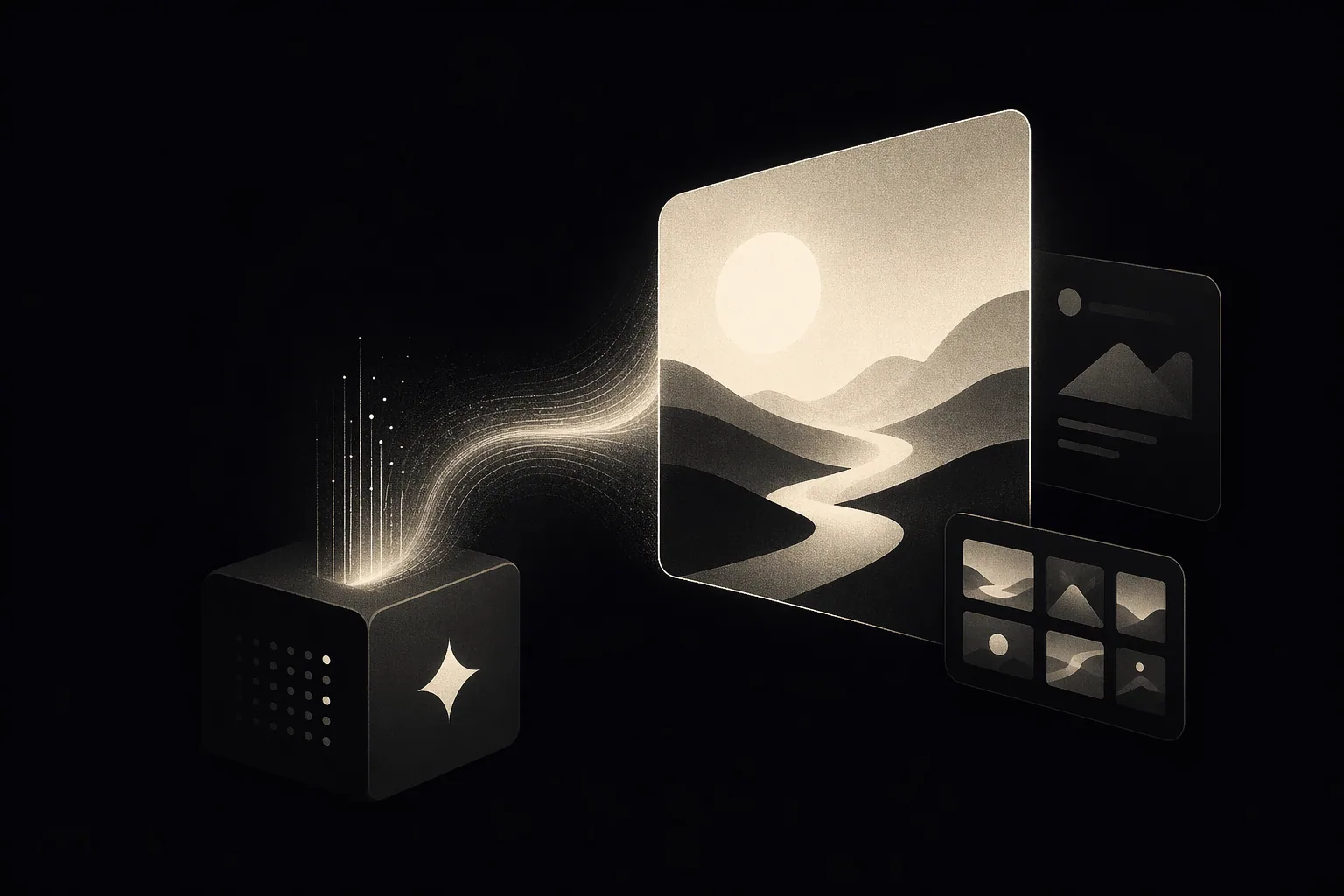
Every blog post image on this site is generated by AI — the hero images, the section illustrations, the cards on the blog overview page. None of them are stock, none were painted by a human, and all of them match the brand.
That matters for two reasons.
First, consistency. AI imagery calibrated to your palette and composition rules produces a visual identity no stock library can match. Every image across the site feels like it belongs to the same brand, because it does.
Second, speed and scale. A traditional illustrator charges $200–$500 per image and delivers in a week. A stock photo makes your content look like a thousand other businesses. AI delivers original, on-brand imagery in minutes — which means you can actually keep up with a serious content calendar instead of falling behind or resorting to generic stock.
The same principle extends to writing: AI drafts a first version from a brief, a human edits for voice, accuracy, and anything specific. You publish three to five times as fast without the content feeling AI-generated — because the human judgment is what the human brought.
This is where the line between “AI website” and “AI-powered agency” blurs. The AI is building for the site. But the site is also the proof that AI can build well. What we ship here is the demo of what we ship for clients.
Automated Lead Capture and Routing
The biggest waste of AI on a website is not wiring it into what actually matters — the sales pipeline.
On digitaloutbreak.co, a visitor can become a lead from the quote form, the contact form, the free SEO audit tool, or the AI Assistant. Every path funnels into one branded inbox with full context attached — so a lead from the chatbot arrives with the whole transcript of what the visitor asked, not just “new lead: john@example.com.” The lead is already half-qualified before anyone on our team has read the first line.
That’s the difference between AI being a gimmick and AI being a tool. A chatbot that doesn’t route context to your inbox is a toy. A chatbot that delivers a qualified, contextualized lead with the visitor’s actual question attached is a sales tool.
What It Costs Compared to the Human Equivalent
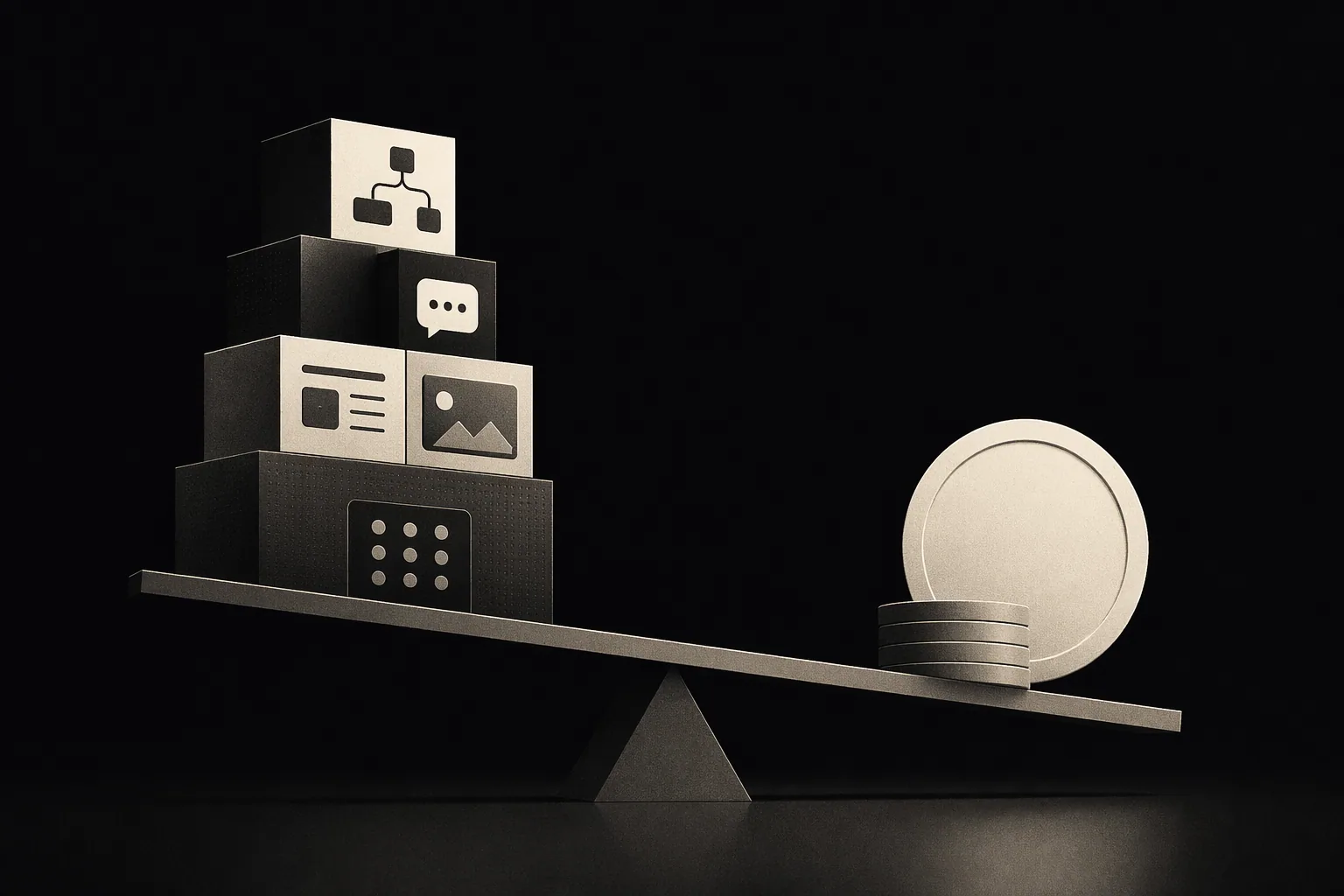
The real story on cost isn’t the build price — it’s what the AI layer replaces.
A chatbot that handles a hundred prospect conversations a month does the work of a sales development rep that would run thousands per month. AI-generated imagery across a full content calendar costs a tiny fraction of what a freelance illustrator charges at scale. AI-drafted content plus human editing publishes three to five times faster than writing from a blank page.
And unlike the human equivalent, all of it runs around the clock, with no weekends, vacations, or turnover cost. That gap — enterprise-grade AI labor for small-business operating budgets — is the real reason AI websites are becoming table stakes. It’s not the novelty. It’s the economics.
Build cost itself varies by scope and which layers you want — from a standalone chatbot bolted onto an existing site, to a full AI layer across imagery, content, lead capture, and search optimization. Every project is custom-scoped; if you want a real number for your specific case, request a quote and we’ll come back with a plain-English breakdown.
Who Gets the Most Out of an AI Website
The honest answer: most businesses selling to informed buyers benefit from at least part of the AI layer. The question is which parts, and in what order.
You’ll see the biggest immediate payoff if:
- Your business gets steady web traffic and you’re answering the same questions manually every week. A chatbot earns its keep at even 10–20 conversations a month.
- You’re actively investing in content marketing and SEO. AI imagery, passage-optimized content, and GEO are direct upgrades to what you’re already doing.
- Your industry is being actively indexed by AI search engines — which at this point is effectively every B2B and local service industry.
- You sell to decision-makers who expect a modern web experience. “Modern” increasingly means AI is expected, not optional.
Even if only one or two of those apply to you, there’s almost always a useful starting point — whether that’s just the assistant, just the AI search optimization, or a lightweight content workflow. We scope each engagement around what actually moves the needle for your business, not what fits a fixed menu.
The question isn’t whether to add an AI layer. It’s when — and how much of your competitive edge you want to leave on the table before you do.
At Digital Outbreak, every AI feature described above is live on this site. Poke around. Ask the AI Assistant something. The whole point of publishing this article is that you don’t have to take our word for any of it — the proof is the site itself.
When you’re ready to build your own, we know where to start.